
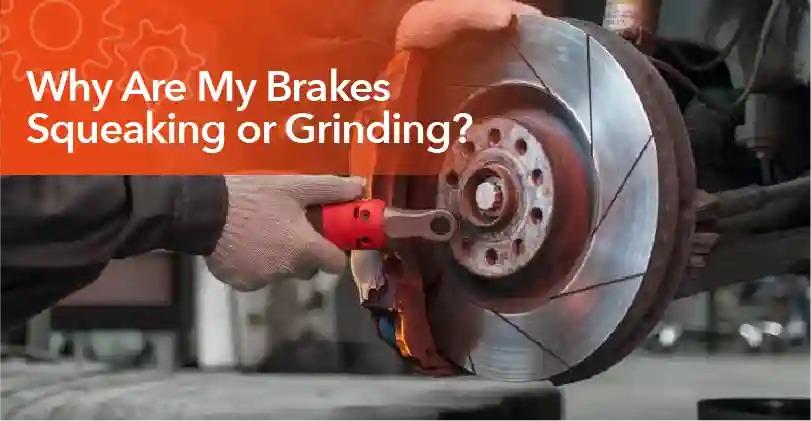
Why Are My Brakes Squeaking or Grinding? Causes and What to Do
Why are my brakes squeaking? A light squeak can come from moisture, brake dust, or a thin layer of rust on the rotor. A constant squeal can point to worn brake pads, while grinding often means the pad material is gone and metal is contacting the rotor.
The sound matters, but so does when it happens. A brief noise on a cold morning isn’t the same as a grinding sound every time you stop. That difference can help you decide when to monitor the noise and when to get your brakes checked.
Why Are My Brakes Squeaking or Grinding? Quick Answer
A temporary squeak is often caused by moisture, surface rust, dust, or new brake components. Persistent squealing deserves an inspection because worn pads, glazing, or brake hardware can cause it. Grinding is more serious and can mean metal-on-metal contact.
If you’re hearing grinding, don’t keep driving and hope it goes away. Continued contact between the metal backing of a worn pad and the rotor can score or damage the rotor.
For a persistent noise, a brake inspection in Englewood can identify whether you’re dealing with normal surface noise or actual brake wear. All Season Tire offers a free brake inspection and checks the pads, rotors, calipers, brake fluid, and brake lines.
Squeak vs Squeal vs Grind: What Each Noise Means
The type of noise gives you a useful first clue. It doesn’t replace an inspection, but it can help you understand what your car may be telling you.
| Brake noise | Common cause | What to do |
| Light squeak on the first few stops | Moisture or surface rust | Monitor it if it disappears |
| High-pitched squeal | Wear indicator, dust, glazing, or hardware | Have the brakes checked if it continues |
| Squeak after new pads | New parts, pad material, hardware, or installation | Give it a short period, then inspect if it persists |
| Scraping or grinding | Severe pad wear or metal-on-metal contact | Stop driving and have the brakes inspected |
| Grinding with poor stopping | Severe brake wear or another brake fault | Treat it as urgent |
Brake wear indicators are small metal pieces designed to make noise as the pad gets thin. The exact replacement point varies by vehicle, so technicians should compare pad thickness with the manufacturer’s specification. A 3 mm measurement is used as a replacement point on some vehicles, but it isn’t a universal number for every car.
Common Causes of Brake Squeaking
Brake squeaking doesn’t always mean you need new pads. Several simple conditions can create noise.
Morning rust film
A wet or humid night can leave a thin rust film on exposed rotor surfaces. The first few brake applications can make a light scraping or squeaking sound as the pads clean the surface.
This usually fades after a few stops. If the noise continues throughout the drive, don’t assume the rust is the only cause.
Brake dust and debris
Brake dust builds up during normal use. Small pieces of road debris can also get between the pad and rotor. Either condition may create a squeak or scraping sound.
The noise may come and go. That makes it harder to diagnose by sound alone.
Worn brake pads
Worn pads are one of the most common reasons for persistent squealing. Many brake pads use a wear indicator that contacts the rotor and creates a high-pitched warning sound when the friction material gets low.
If the squeal happens every time you brake, it’s worth checking the pad thickness rather than waiting for the noise to become louder.
You can also read When to Replace Brake Pads: 7 Warning Signs for more information about pad wear and the signs that often appear before serious brake damage. The article is one of All Season Tire’s recent brake posts.
Glazed pads or rotors
Excessive heat can change the surface of brake pads or rotors. This condition, called glazing, can cause noise and may affect braking performance.
Hard braking, heavy loads, towing, or repeated braking on steep roads can create more heat. If noise comes with reduced braking performance, get the system checked.
Brake hardware problems
Brake pads work with clips, shims, and other hardware. Poorly fitted or damaged hardware can allow unwanted movement and vibration.
A technician can check these parts during an inspection. The goal isn’t simply to make the noise disappear. The cause needs to be identified first.
Grinding When Braking Is Urgent
Grinding brakes can mean the friction material has worn away and the metal backing is contacting the rotor. That’s different from a harmless morning squeak.
Once metal touches the rotor, it can create deep grooves and scoring. It may also turn a pad replacement into a larger brake repair.
Don’t try to solve a grinding noise by spraying a product onto the brakes. Brake components need the correct inspection and repair. Avoid taking the brake assembly apart yourself if you’re not trained to work on it.
If the vehicle also has weak stopping power, a soft pedal, pulling, or a brake warning light, treat the situation as even more urgent.
If you need to know whether your noise has reached this point, schedule a brake inspection with All Season Tire. The shop checks the pads and rotors instead of guessing from the sound alone.
When Squeaky Brakes Are Not Always a Problem
A short squeak after rain or overnight parking may not indicate a serious fault. New brake pads can also make some noise while the components settle into normal use.
The pattern matters.
A noise that lasts for the first few stops and then disappears is less concerning than a squeal that continues every time you brake. A noise that becomes louder or comes with vibration, pulling, or longer stopping distances deserves attention.
Don’t judge the condition of the brakes from noise alone. A pad can look acceptable from outside while another pad wears differently. A proper inspection gives a better picture.
Can You Drive With Squeaky or Grinding Brakes?
You may be able to continue driving if the squeak is brief, mild, and linked to moisture or surface rust. Persistent squealing should still be checked because it can indicate pad wear or another brake issue.
Grinding is different. If the brakes are grinding during stops, avoid driving the vehicle until the cause has been assessed.
The same applies if the brake pedal feels soft, the car pulls when stopping, or stopping takes noticeably longer. These symptoms can point to problems beyond normal brake noise.
Colorado Note: Cold Mornings, Winter Roads and Mountain Braking
Colorado weather can create conditions that make brake noise more noticeable. Overnight moisture can leave surface rust on rotors, especially during cold mornings.
Winter road treatment can also leave dirt and residue around the wheels and braking components. That doesn’t mean every winter squeak signals worn pads, but a noise that doesn’t clear deserves a closer look.
Mountain driving creates another concern. Long downhill grades require repeated braking and can build substantial heat. Drivers heading into the mountains should avoid riding the brakes continuously when possible and follow their vehicle manufacturer’s guidance for downhill driving.
If you regularly drive from South Denver toward the mountains, pay attention to changes in brake feel as well as noise.
What a Brake Inspection Actually Checks
A proper brake inspection looks at more than the brake pads. The technician checks several parts to find the actual source of the problem.
At All Season Tire, the inspection includes these areas:
- Brake pad thickness: The technician checks how much friction material remains and looks for uneven wear.
- Rotor condition: The rotor gets checked for grooves, scoring, damage, and other surface problems. Rotor thickness must also stay above the vehicle manufacturer’s minimum specification.
- Calipers: The technician checks the calipers for problems that could affect pad movement and braking.
- Brake hardware: Clips, shims, and related parts can contribute to noise if they’re damaged or not working correctly.
- Brake fluid: Fluid level and condition are checked as part of the inspection.
- Brake lines: The technician checks the brake lines for visible issues.
- Pedal feel: Brake pedal response can provide another clue about the condition of the system.
All Season Tire says its brake inspection takes about 30 minutes and is free. The shop provides a report and recommendation after checking the system.
This approach is more useful than replacing parts just because a brake makes a noise.
Brake Noise and Steering Wheel Vibration Can Be Connected
A steering wheel that shakes during braking can point to rotor or brake problems. It doesn’t always mean the brakes are the only possible cause, though.
For more context, see Why Is My Car Shaking or Idling Rough? Common Causes Explained.
If the vibration happens mainly when you press the brake pedal, mention that detail during your inspection. It can help the technician narrow down the cause.
Get Your Brakes Inspected in Englewood
If a brake noise keeps returning, an inspection can tell you whether you need service or simply need to keep an eye on the condition.
All Season Tire is located at 4000 S Broadway in Englewood and serves drivers in Englewood and the South Denver area. The shop lists brake inspection as one of its services and provides free brake inspections.
You can book a brake inspection in Englewood or call 720 877 4243. If you’re hearing grinding, don’t delay the inspection.
For general questions or scheduling, you can also contact All Season Tire directly.
Frequently Asked Questions
Why are my brakes squeaking but the pads look fine?
The pads may still have usable material while moisture, dust, glazing, debris, or brake hardware causes the noise. A visual check of one pad also may not show uneven wear elsewhere.
Is it safe to drive with squeaky brakes?
Sometimes. A brief squeak after rain or overnight parking can come from surface rust and may disappear after a few stops. Persistent squealing should be inspected, especially if other symptoms appear.
Why do my brakes grind when I stop?
Grinding can happen when worn brake pads allow metal to contact the rotor. It can damage the rotor and should be treated as an urgent brake problem.
Can I spray anything on my brakes to stop the squeak?
Don’t spray household products or lubricants onto brake friction surfaces. The noise needs a proper diagnosis first. Some brake products are made for specific applications, but using the wrong product can affect braking.
Do new brake pads squeak at first?
They can. New pads and related components may produce temporary noise, and installation or pad material can also affect brake noise. If the squeak persists, have the work checked.
How much does a brake inspection cost?
All Season Tire currently lists its brake inspection as free. The shop says the inspection takes about 30 minutes.
How long can I drive with grinding brakes?
You shouldn’t plan to drive with grinding brakes. Grinding can mean metal-on-metal contact and may cause further rotor damage. Have the vehicle inspected before continuing to drive.
Final Takeaway
Brake noise doesn’t always mean an expensive repair. A short morning squeak can come from moisture or surface rust, while persistent squealing can point to worn pads or another brake issue.
Grinding deserves a different response. It can mean the pads have worn through and the metal backing is contacting the rotor.
When you’re unsure, an inspection is the safest way to know what you’re dealing with. All Season Tire provides brake inspections in Englewood and can check the pads, rotors, calipers, fluid, and brake lines before recommending the next step.