

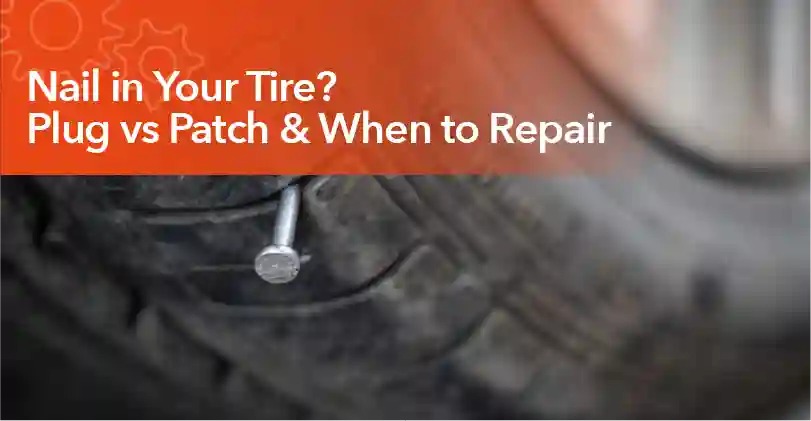
Nail in Your Tire? What to Do (Plug vs Patch & When It Can Be Repaired)
Finding a nail in your tire can make you wonder if you should pull it out, keep driving, or head straight to a tire shop. In many cases, a nail in the tread can be repaired, but the tire needs a proper inspection first.
If you find a nail or screw, leave it in place. Removing it can turn a slow leak into a faster one. Check the tire pressure if you can, then arrange an inspection as soon as possible.
For drivers in Englewood and South Denver, road debris and construction areas can make tire punctures a common problem. The good news is that a damaged tire doesn’t always need replacement.
Nail in Your Tire? Here’s What to Do First
The safest first step is simple. Don’t pull the nail out before a technician checks the tire.
A nail or screw may be blocking part of the hole. Once you remove it, the tire can lose air quickly. If the tire still holds pressure, avoid unnecessary driving and arrange a tire inspection.
Follow these steps:
- Leave the nail or screw where it is.
- Check your tire pressure if you have a gauge.
- Look for a rapid loss of air.
- Avoid long trips or highway driving.
- Have the tire inspected by a trained technician.
A nail in the tread often can be repaired. However, the location, size, angle, tread condition, and any internal damage all matter.
Can You Drive With a Nail in Your Tire?
You may be able to make a short, slow drive to a tire shop if the tire still has enough air and isn’t showing signs of serious damage. Don’t treat that as permission to continue normal driving.
A tire that’s losing air quickly needs more attention. Driving on an underinflated tire can cause internal damage that you can’t see from the outside. USTMA recommends removing a tire from the wheel for a complete internal inspection when it has lost significant air.
Stop driving if the tire is flat, badly damaged, or visibly separating. In that situation, use a spare or arrange roadside assistance instead.
If you only need help understanding the service, see All Season Tire’s Flat Tire Repair service for more information. The shop lists flat tire repair among its tire services and serves drivers in Englewood and the South Denver area.
When a Tire Can Be Repaired and When It Can’t
A puncture can usually be considered for repair when it stays within the tread area and meets accepted repair limits. USTMA recommends repairs only when the puncture is no larger than 1/4 inch, or 6 mm, in diameter.
The tire also needs enough usable tread. USTMA guidance says a tire should not be repaired when the tread has reached its treadwear indicators or has only 2/32 inch of tread remaining.
Here’s a simple guide:
| Tire condition | Repair usually possible? |
| Small puncture in the main tread | Often yes |
| Puncture up to 1/4 inch | Often yes, after inspection |
| Damage in the sidewall | No |
| Damage in the shoulder area | No |
| Large puncture | Usually no |
| Angled puncture reaching the shoulder | No |
| Tire with an improper previous repair | No |
| Tire with serious internal damage | No |
The final decision should come after an internal inspection. A tire may look fine from the outside while having damage inside.
Why the Sidewall Matters
The sidewall flexes as the tire rolls. That’s one reason a sidewall puncture isn’t treated like a simple tread puncture.
The same concern applies to damage that reaches the shoulder or belt edge. USTMA says puncture repairs should not extend into these areas.
So, if the nail is close to the sidewall, don’t assume a plug will solve the problem. A technician may recommend replacement instead.
Plug vs Patch vs Patch Plug: The Right Repair
A professional tire repair normally uses a combination patch plug installed from inside the tire. A plug alone isn’t considered an acceptable permanent repair under USTMA’s recommended procedure.
The difference matters.
A plug fills the puncture channel. A patch seals the inner liner. The combination method addresses both parts of the repair.
The tire must first come off the wheel so the technician can inspect the inside. The damaged area is then prepared, filled with suitable repair material, and sealed with a patch.
A driveway plug kit works differently. You insert the plug from the outside without removing the tire. That may stop air from escaping for a while, but it doesn’t allow a technician to inspect the inside for damage.
For that reason, don’t treat an outside plug as a permanent fix. If you’ve already used one, tell the technician. The tire needs an inspection before anyone decides whether it can remain in service.
How Much Does It Cost to Fix a Nail in a Tire?
A typical nail repair may cost around $20 to $45, depending on the shop and the tire. Some tires may also qualify for free repair under a road hazard warranty.
The cost can change if the tire needs replacement. Brand, size, vehicle fitment, tread condition, and the type of tire all affect replacement cost.
That’s why an inspection makes sense before buying a new tire. A small tread puncture may be repairable, while a sidewall puncture usually means replacement.
If replacement becomes necessary, All Season Tire also offers tire installation services for new and used tires. The shop says it installs tires for cars, trucks, and SUVs.
How Long Does a Tire Plug or Repair Last?
A properly performed repair can last for the remaining usable life of the tire when the tire meets repair requirements and the repair follows accepted procedures.
A temporary outside plug is different. Its short-term performance doesn’t make it equivalent to a proper internal repair.
The tire’s age and tread condition still matter. A repair doesn’t restore worn tread or reverse damage caused by driving while the tire was badly underinflated.
If the tire is already worn out, replacement may make more sense. You can also read the All-Season Tire guide on when to replace your tires when a puncture inspection shows that repair isn’t the right option.
Nail Near the Sidewall? Why a Shop May Say Replace
A shop may recommend replacement when the puncture is near the sidewall or shoulder. That’s a safety decision, not necessarily an attempt to sell you another tire.
USTMA limits puncture repairs to the tread repair area. It specifically says not to repair damage that extends into the shoulder or belt edge area.
The same applies when a tire has serious internal damage. A tire that was driven while severely underinflated can suffer damage that isn’t visible until the tire is removed from the wheel.
That’s why a proper inspection matters more than the size of the nail alone.
Colorado Note: Construction Zones and Road Debris
Englewood and the South Denver metro see plenty of construction activity. Loose metal, screws, nails, and other road debris can end up in travel lanes and shoulders.
You may notice a puncture after driving through a construction area, but the damage doesn’t always happen at the exact moment you see it. A tire can pick up a nail and continue losing air slowly for days.
Keep an eye on tire pressure, especially when you notice a TPMS warning. All Season Tire’s recent article, TPMS Light On? What the Warning Means, also covers tire pressure warnings and their connection with changing conditions.
For another trusted reference, the U.S. Tire Manufacturers Association Tire Repair Basics explains the accepted limits and inspection process for puncture repairs.
Get Your Flat Tire Repaired in Englewood
If a nail is stuck in your tire, getting it inspected early can help you avoid a larger problem. All Season Tire serves Englewood and the South Denver metro and offers flat tire repair. The shop also accepts walk-ins and says most jobs are completed the same day.
You can get your flat tire repaired after the tire has been inspected and confirmed repairable.
For questions or to check availability, call 720 877 4243. All Season Tire is located at 4000 S Broadway, Englewood, CO 80113.
If the tire can’t be repaired, the team can help you determine whether replacement is the better option.
Frequently Asked Questions
Should I pull the nail out of my tire?
No. Leave the nail in place until a technician can inspect the tire. Removing it can cause the tire to lose air faster.
Can you drive with a nail in your tire?
Only consider a short and slow drive to a tire shop if the tire still has adequate pressure and isn’t showing serious damage. Don’t continue normal driving on a tire that’s losing air.
Is a plug or a patch better for a tire?
Neither should be used alone as the proper repair. USTMA recommends filling the puncture with a suitable rubber stem or plug and sealing the inner liner with a patch.
How long does a tire plug last?
A proper internal repair can last for the remaining usable life of a suitable tire. An outside plug should not be treated as a permanent repair.
Can a nail in the sidewall be repaired?
Generally, no. USTMA limits puncture repairs to the approved tread area and says not to repair damage that reaches the sidewall or shoulder area.
How much does it cost to fix a nail in a tire?
A typical repair may cost around $20 to $45. The actual price depends on the tire, damage, shop, and whether the tire qualifies for warranty coverage.
Is a repaired tire safe at highway speed?
A properly repaired tire that meets repair requirements can return to service. However, the technician must first confirm that the puncture is repairable and that the tire has no internal damage.
A nail in your tire doesn’t automatically mean you need a new tire. The location and condition of the damage decide what happens next. Leave the nail in place, avoid unnecessary driving, and have the tire inspected before choosing between a repair and replacement.