
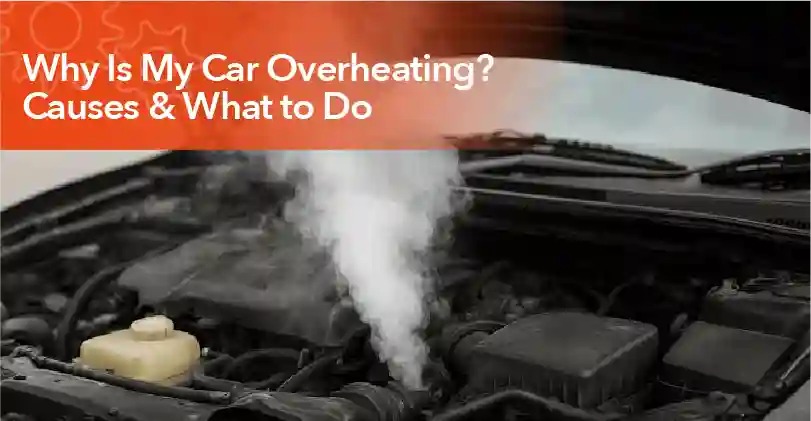
Why Is My Car Overheating? Causes, What to Do & When to Stop
If your temperature gauge is climbing toward the red or you see steam under the hood, act fast but stay calm. Turn off the A/C, turn the heater on full blast, pull over safely, and shut the engine off. Do not open the radiator cap while the engine is hot. Once the car has cooled, check your coolant level or call for a tow if you are not sure it is safe to keep driving.
Overheating can be caused by several different things, from a small coolant leak to a failing water pump, so guessing at the fix rarely solves the problem for good.
At All Season Tire in Englewood, we diagnose the actual cause of your overheating before quoting any repair, and give you a free assessment so you know exactly what is going on under the hood.
Can You Keep Driving If Your Car Is Overheating?
Short answer: no. Continuing to drive an overheating car is one of the fastest ways to turn a simple fix into an expensive one. When an engine runs too hot for too long, it can warp the cylinder head, blow a head gasket, or crack the engine block. Those repairs cost far more than the coolant leak or thermostat that likely started the problem.
If your gauge is climbing but not yet in the red, pulling over and shutting off the engine for a while can sometimes let things cool enough to continue slowly to a safe location. But if you see steam, smell something sweet and hot, or the gauge is pegged in the red, it is time to stop completely and call for a tow instead of pushing your luck.
A good rule of thumb: if you are debating whether it is safe to keep driving, that hesitation is usually your answer. A tow truck costs a lot less than a new engine, and a short wait on the shoulder is a lot less stressful than watching your temperature gauge climb again a few miles down the road. It also helps to pull off somewhere flat and safe, away from traffic, rather than stopping right on the shoulder of a busy highway if you have any choice in the matter.
Common Causes of an Overheating Engine
Overheating almost always comes down to something interrupting your engine’s cooling system. Here are the usual suspects.
| Cause | What’s Happening |
| Low coolant or a leak | Not enough fluid circulating to absorb engine heat. |
| Stuck thermostat | The valve that controls coolant flow gets stuck closed. |
| Failed water pump | Coolant is not being circulated through the engine. |
| Bad radiator fan | Airflow through the radiator drops, especially at low speed or idle. |
| Clogged radiator | Debris or scale blocks proper heat exchange. |
| Blown head gasket | Coolant and combustion gases mix, causing pressure and heat issues. |
| Low oil | Oil helps manage engine heat too, so low oil can contribute to overheating. |
Most of the time it is one of the simpler and cheaper causes to fix, like a coolant leak or a stuck thermostat, rather than something as serious as a head gasket. But since several of these can produce the same symptom, a real diagnosis matters more than guessing based on the gauge alone.
A coolant leak can come from a lot of places too, not just the radiator. Hoses crack with age, the water pump has a seal that can wear out, and the heater core inside your dash can develop a slow leak of its own. Each of these looks like a simple case of low coolant on the surface, but they need different fixes and different amounts of labor, which is part of why a proper inspection is worth it before assuming the worst.
What NOT to Do When Your Car Overheats
A few common reactions actually make things worse. Here is what to avoid.
- Do not open the radiator cap while the engine is hot. The system is pressurized, and hot coolant can spray out and cause serious burns.
- Do not pour cold water on a hot engine. The sudden temperature change can crack the engine block or cylinder head.
- Do not ignore the gauge and keep driving normally. Even a short distance at full temperature can cause lasting damage.
- Do not assume it will just cool down on its own while you keep driving. The problem does not fix itself while the engine is still running.
The safest move is always the same: pull over, shut it off, and let it cool before you touch anything under the hood. Once the engine has fully cooled, usually after 30 minutes or more, you can safely check the coolant level in the overflow reservoir without opening the radiator cap itself.
Warning Signs & Your Temperature Gauge
Your temperature gauge is the main warning sign, but it is not the only one. Watch for these together:
- The needle climbing toward or into the red zone.
- A warning light on the dash shaped like a thermometer.
- Steam coming from under the hood.
- A sweet smell, which usually means leaking coolant.
- The heater blowing cold air even though it is turned on, which can mean low coolant.
- A noticeable loss of power, sometimes called limp mode, where the engine limits itself to prevent damage.
If you notice two or more of these at once, treat it as a real overheating event, not just a random gauge fluctuation. If you have also seen a check engine light recently, our post on why your check engine light might be on covers how overheating can sometimes trigger a code. And if you have felt shaking or rough idling along with the heat issue, our post on why your car might be shaking or idling rough is worth a look too, since engine trouble often shows up in more than one way at once.
Colorado Note: Altitude, Mountain Grades & Summer Heat
Driving around Englewood and the South Denver area puts extra strain on a cooling system compared to flatter, lower altitude places.
Long uphill climbs into the mountains ask a lot of your engine. Climbing at a steady incline for miles keeps the engine working hard continuously, which generates more heat than flat driving. Add a full car or a trailer, and the load on the cooling system goes up even more.
Altitude itself plays a role too. Thinner air at higher elevations makes it a little harder for your engine and radiator to shed heat efficiently compared to sea level.
Then there is Colorado summer heat. Hot Front Range afternoons combined with stop and go traffic on I-25 or Santa Fe Drive are a tough combination for a cooling system that is already a little weak from age or a slow leak. Sitting in traffic means less airflow through the radiator too, which makes a marginal cooling system show its weakness right when you need it most.
If you regularly drive mountain passes or tow anything at altitude, it is worth having your cooling system checked before summer road trip season, not after you are already stuck on the shoulder somewhere.
Winters here bring a different kind of stress. Coolant also acts as antifreeze, and if the mixture is too weak or the fluid is old, it does not protect the engine from freezing temperatures the way it should. A cooling system check before winter can catch both the summer heat risk and the winter freeze risk in one visit, since they both come down to the same fluid and the same system.
How a Shop Diagnoses an Overheating Car
A real diagnosis goes well beyond just topping off coolant and sending you on your way. Here is roughly what a proper check involves:
- Pressure test. The cooling system is pressurized to check for leaks that are not obvious when the engine is off.
- Coolant and leak check. Looking at hoses, the radiator, and the water pump for any sign of leaking fluid.
- Thermostat and fan test. Confirming both are actually opening, closing, and running when they should.
- Combustion or head gasket test. A test that checks for combustion gases in the coolant, which points to a blown head gasket.
This kind of testing is what separates a real diagnosis from a guess. It tells you exactly which part failed, so you are not paying to replace a radiator when the real issue was a stuck thermostat, or vice versa.
We reference your vehicle’s owner manual cooling specs during this process, rather than a generic checklist that treats every car the same way. Cooling systems vary quite a bit between makes and models, and using the correct specs is part of what makes the diagnosis accurate instead of a rough guess.
Get Your Cooling System Checked in Englewood
Overheating is not something to put off, especially with Colorado’s mountain grades and summer heat working against an already stressed cooling system. If your gauge has been creeping up, or you have already had one overheating scare, get it checked before it happens again on a highway or mountain pass.
At All Season Tire, we will pinpoint the actual cause with real diagnostic testing before we quote you anything. Call us at 720-877-4243 or stop by our Englewood shop to get your cooling system looked at.
Frequently Asked Questions
What is the most common reason a car overheats?
Low coolant from a leak is one of the most common causes, followed by a stuck thermostat or a failing water pump. A proper diagnosis is the only way to know for sure which one is affecting your car.
Can I still drive if my car is overheating?
No, it is not safe to keep driving normally. Pull over, shut off the engine, and let it cool. Continuing to drive risks serious engine damage, including a blown head gasket or cracked engine block.
What should I do immediately when my car overheats?
Turn off the A/C, turn the heater on full, pull over safely, and shut off the engine. Do not open the radiator cap while it is hot, and let the engine cool before checking anything.
Will low oil cause a car to overheat?
Yes, it can contribute. Oil helps manage heat inside the engine, so running low on oil can make overheating worse or more likely, on top of causing its own separate problems.
How much does it cost to fix an overheating car?
It depends entirely on the cause. A coolant leak or hose repair is usually much cheaper than a water pump or head gasket. A proper diagnosis gives you an accurate quote instead of a rough guess.
Is it safe to add coolant when the engine is hot?
No. Never open the radiator cap or add coolant to a hot engine, since the system is pressurized and can spray hot fluid. Wait until the engine has fully cooled down.
Can overheating ruin my engine?
Yes, if you keep driving on an overheating engine. Prolonged high heat can warp the cylinder head, blow a head gasket, or crack the engine block, all of which are far more expensive than catching the problem early.