

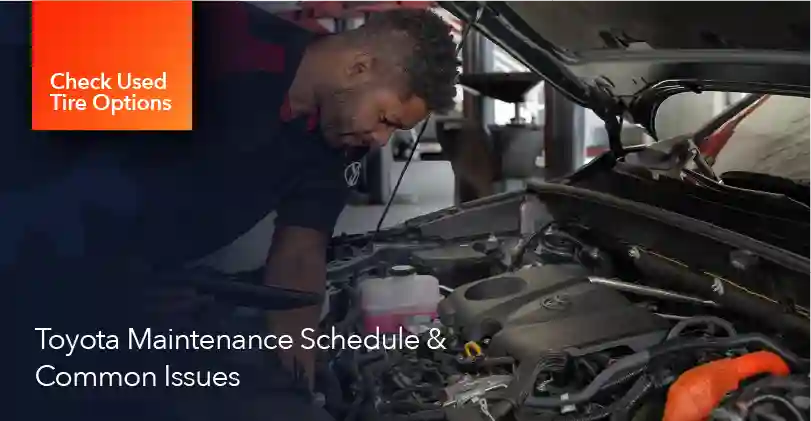
Toyota Repair in Englewood, CO: What Your Car Actually Needs and When
If you’re searching for Toyota repair in Englewood, chances are you just want a straight answer. What’s due right now, and can you trust someone nearby to do it right? Here’s the short version. Most Toyotas need an oil change every 5,000 to 10,000 miles, a bigger service at 30,000 and 60,000 miles, and a full inspection at 90,000. You don’t need a dealer for any of it. A qualified local shop can handle it just as well, often for less.
Toyotas have a strong reputation for reliability, and that reputation is mostly earned. So, this guide isn’t going to invent problems that don’t exist. It’s going to walk through what’s actually due, what a few known issues look like, and how driving in Englewood and the South Denver area changes things a little.
Toyota Maintenance Schedule by Mileage
Toyota builds most of its schedules around round mileage numbers, though your owner’s manual and Toyota’s maintenance minder system will always have the final word for your specific model.
| Mileage | What’s Typically Due |
| 5,000 to 10,000 miles | Oil and filter change, tire rotation, fluid check |
| 30,000 miles | Cabin and engine air filters, spark plug check, brake inspection, fluid flush as needed |
| 60,000 miles | Coolant service, transmission fluid check, timing components inspected on chain-driven engines |
| 90,000 miles | Spark plugs (on most models), drive belts, more thorough suspension and brake inspection |
A couple of things worth flagging here. Synthetic oil generally stretches the interval closer to 10,000 miles, while conventional oil sticks closer to 5,000. And hybrid Toyotas add a few extra checks, like the hybrid battery cooling filter, which often gets skipped if a shop isn’t specifically looking for it.
Do I Need to Go to the Dealer, or Can a Local Englewood Shop Do This?
You don’t need the dealer for routine maintenance, and honestly, most repairs don’t require one either. Dealers are useful for warranty work and complex electrical diagnostics tied to factory software. Everything else- oil changes, brakes, tire rotations, fluid services- fits well within what a good independent shop handles every day.
The one thing that does matter is genuine or OEM-equivalent parts, especially for filters and fluids. That’s where using genuine OEM parts and correct oil specs actually protects your engine long term, dealer or not.
Common Toyota Issues Worth Knowing About
Toyotas don’t have a long list of chronic problems, which is part of why they hold their value so well. Still, a few things come up often enough to mention.
- Water pump wear on certain four-cylinder models, usually showing up as a coolant smell or a slow coolant loss over time.
- Minor oil consumption on some 2AR-FE and similar four-cylinder engines. It’s usually not urgent, but it’s worth tracking between changes.
- Timing chain stretch on higher-mileage engines with chains rather than belts, which can cause a rattling noise on cold start.
None of these are common enough to expect. They’re just worth watching for, especially past 100,000 miles.
What a Check Engine Light Usually Means
A check engine light on a Toyota is often something small. A loose gas cap, an aging oxygen sensor, or a minor emissions-related code are the most frequent causes. That said, a flashing light is different from a steady one. A flashing check engine light means stop driving and get it looked at soon, since that usually points to a misfire that can damage the catalytic converter if ignored.
If the light is steady, it’s usually safe to drive a short distance to get it scanned, though it shouldn’t sit unaddressed for weeks.
Englewood, CO Note: Altitude, Cold Starts, and Long Commutes
Driving in Englewood and the wider Front Range comes with a few quirks that affect maintenance timing. The altitude here thins the air slightly, which can affect fuel mixture and cause engines to run a touch leaner than at sea level. Most modern Toyotas compensate for this automatically, but it’s still worth mentioning to your technician if you’re having any performance issues.
Cold winter mornings are harder on batteries and on oil viscosity. A 5W-30 that flows fine in summer can thicken up on a 10-degree morning, which is part of why some Englewood drivers switch to a slightly thinner winter-grade oil. And if you’re commuting up and down I-25 or Broadway daily, that’s more highway miles and steadier engine temps than stop-and-go city driving, which tends to be gentler on brakes but harder on tires.
If you’ve noticed steering pull or uneven wear from all those miles, it’s a good time to check out our recent post on the early warning signs of a wheel alignment problem before it turns into a bigger tire bill.
What’s Included in a Toyota Service Visit Here
A proper service visit covers more than the oil. At a minimum, a good technician should check tire tread and pressure, inspect brake pads and rotors, look over belts and hoses, and scan for any stored codes even if the check engine light isn’t on.
Tire rotation matters more than people think here, partly because of the altitude driving mentioned above. If it’s been a while, our tire rotation and balancing service is a quick add-on to any visit and helps even out that highway wear pattern.
For the manufacturer’s own guidance on service intervals, Toyota’s official maintenance schedule is a solid reference to check against whatever your maintenance minder shows.
Book Your Toyota Service in Englewood
You don’t need to guess at what’s due or drive across town to the dealer for it. If you’re not sure what your mileage calls for, bring in your maintenance minder reading or your last service receipt and we’ll walk through it with you. You can schedule a Toyota service appointment online or call us directly at 720-877-4243.
Frequently Asked Questions
Can any mechanic work on a Toyota, or do I need the dealer?
A qualified independent shop can handle nearly all Toyota maintenance and repairs. The dealer is really only necessary for warranty claims or factory recalls.
What is the recommended Toyota maintenance schedule?
Generally, oil changes every 5,000 to 10,000 miles, a mid-level service at 30,000, a bigger one at 60,000, and a full check at 90,000. Your specific model may vary slightly.
How often should I change the oil in my Toyota?
Every 5,000 miles for conventional oil, or up to 10,000 for full synthetic, though your maintenance minder is the more precise guide.
Why is my Toyota’s check engine light on?
Often something minor like a gas cap or a sensor. A flashing light is more urgent than a steady one and shouldn’t be ignored.
Do I need a timing belt or timing chain service on my Toyota?
Most newer Toyotas use timing chains, which typically last the life of the engine. Older models with timing belts usually need replacement around 90,000 to 100,000 miles.
Is it normal for a Toyota to use oil between changes?
A small amount can be normal on certain four-cylinder engines. If you’re adding oil more than once between changes, it’s worth having it checked.
Where can I get Toyota maintenance done near Englewood, CO?
All Season Tire, located at 4000 S Broadway in Englewood, handles Toyota maintenance and repair for drivers across the South Denver metro area.