


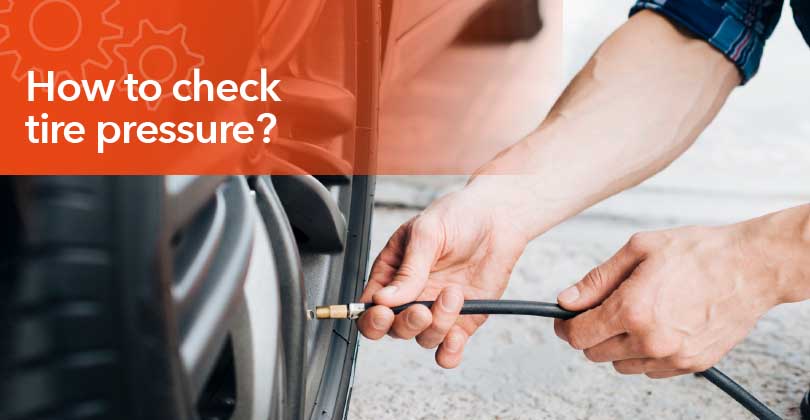
How to Check Tire Pressure (and the Right PSI for Your Car)
Checking your tire pressure is one of the easiest ways to stay safe on the road. Many drivers skip this simple step, but it only takes a few minutes.
Knowing how to check tire pressure helps your car run better. It also saves you money on gas and helps your tires last longer.
In this guide, you will learn how to find the right PSI for your car, check your tire pressure step by step, add air when needed, and reset the tire pressure light. If your tire keeps losing air fast, you may leak. Our Flat Tire Repair team can fix that for you quickly.
Why Correct Tire Pressure Matters
Tire pressure affects how your car drives, handles, and uses fuel. When a tire has too little air, it bends too much at the edges. This makes it wear out faster.
Low tire pressure also makes your engine work harder. This means your car burns more gas than it needs to.
Too much air causes problems, too. A tire with too much air feels hard and does not grip the road as well. It tends to wear out in the middle first.
Tire pressure also affects how your car stops. A tire with the wrong pressure can make your braking distance longer. This matters most in rain or snow.
According to tire safety guidelines from the National Highway Traffic Safety Administration, keeping the right tire pressure helps prevent crashes. That is why checking your tires often is worth the small amount of time it takes.
What Should Your Tire Pressure Be? Finding Your PSI
Every car has its own recommended tire pressure. The car maker sets this number, not the tire maker. So, if you ask, what should my tire pressure be, the answer depends on your car, not on the tires you bought.
Most cars need between 30 and 35 PSI. But some cars need different numbers for the front and back tires. Bigger cars and trucks may need higher numbers, especially when carrying heavy loads.
People often ask, ” What PSI should my tires be, and the safe answer is always to check your specific car first. Do not guess based on what a friend’s car uses, even if it looks similar.
Your spare tire may also need a different pressure. Check this number too, so your spare is ready if you ever need it.
Where to Find the Recommended PSI (Door Jamb Sticker)
You do not have to guess your tire pressure. Open the driver’s door and look at the door jamb. You will see a sticker there with the right PSI for your front and rear tires.
This sticker also shows your tire size and other useful details. If the sticker is hard to read, check your owner’s manual instead.
Do not use the number printed on the side of the tire. That number is the highest pressure the tire can safely hold. It is not the number you should use every day. Using that number can make your ride feel too hard and wear your tires unevenly.
How to Check Tire Pressure Step by Step
Now that you know your PSI number, here is how to check tire pressure the right way. Try to do this once a month, and always before a long trip.
- Park your car on flat ground.
- Make sure the tires are cold. Do not check right after driving.
- Take off the valve cap on the tire.
- Press the tire gauge firmly onto the valve stem.
- Hold it steady and read the number on the gauge.
- Compare this number to the PSI on your door jamb sticker.
- Put the valve cap back on so dirt does not get in.
- Repeat these steps for all four tires, and check your spare too.
This whole process takes less than ten minutes. It is one of the simplest ways to take care of your car.
What You Need: A Tire Gauge
A tire gauge is a small tool that checks tire pressure. You can find one at any auto parts store or gas station. They cost just a few dollars.
There are three common types. Digital, dial, and stick gauges. All of them work well and give a clear reading.
Digital gauges are easy to read because they show large numbers. Pick whichever type feels easiest for you to use.
Checking Cold vs Warm Tires
Tire pressure changes with temperature. Driving heats the air inside your tires. This makes the reading higher than it really is.
For an accurate reading, check your tires when they are cold. Cold means the car has been parked for at least three hours, or driven less than a mile.
The difference can be a few PSI between a cold tire and a warm one. That small gap can throw off your reading.
In Colorado, the weather can change fast. Cold mornings drop tire pressure quickly, sometimes overnight. Check your tires often during the winter months to stay safe.
How to Put Air in Your Tires
Once you know a tire is low, you can add air yourself. Most gas stations have an air pump near the fuel pumps. Some are free. Some cost a dollar or two for a few minutes of air.
Here is how to put air in your tires:
- Check the current pressure with your gauge first.
- Attach the air hose to the valve stem.
- Add air in short bursts, a few seconds at a time.
- Check the pressure after each burst.
- Stop when you reach the number on your door jamb sticker.
- Put the valve cap back on.
If you add too much air, do not worry. Press the small pin in the center of the valve stem. This lets a little air out. Then check the pressure again until it matches your PSI number.
How to Reset the Tire Pressure (TPMS) Light
The tire pressure light turns on when one or more tires are low. This light is sometimes called TPMS, which just means the system that checks your tire pressure.
Once you fill your tires to the right PSI, the light should turn off after a few minutes of driving. If you want to know how to reset the tire pressure light faster, check your owner’s manual. Many cars have a reset button under the dashboard or inside the glove box.
Some drivers ask, why is my tire pressure light still on after I added air. This can happen for a few reasons. One tire may still be slightly low. The sensor may also need more time to update.
Drive at about 50 miles per hour for ten minutes on a smooth road. The sensor should reset on its own. If the light is still on after that, have a shop check the sensor.
When Low Pressure Means a Leak and What to Do
Sometimes a tire keeps losing air no matter how many times you fill it. This often means there is a leak. A leak can come from a nail, a screw, sharp objects on the road, or a damaged valve.
Small leaks are hard to spot. The tire may lose just a few PSI each week. You may not notice anything until the light turns on again.
Watch for warning signs. A tire that looks lower than the others, a hissing sound, or a light that keeps coming back are all signs of a leak.
If the tire light keeps coming back on, do not ignore it. Driving on a low tire can damage the tire and the wheel. It can also be unsafe in traffic or on the highway.
If this keeps happening, our Tire Installation team can check your tires and fix the problem for good.
FAQs
How often should I check my tire pressure?
Check it once a month and before long trips. Check it more often in cold weather.
What should my tire pressure be?
Most cars need 30 to 35 PSI. Check the sticker inside your driver’s door for your exact number.
What PSI should my tires be in winter?
Cold weather can drop your tire pressure by a few PSI. Check your tires more often in winter and add air as needed.
Why is my tire pressure light still on after I added air?
The light may take a few minutes of driving to turn off. If it stays on, one tire may still be low, or the sensor needs a check.
Can I check tire pressure at home?
Yes. All you need is a tire gauge. It takes less than ten minutes to check all four tires.
What if my tire keeps losing air?
This usually means a leak.
Need a Tire Checked? Visit All-Season Tire in Englewood
If your tire pressure light stays on, or a tire keeps losing air, do not wait. Our team at All Season Tire in Englewood can check your tires fast and find the real problem.
We offer flat tire repair, tire installation, and full tire checks for cars, trucks, and SUVs. Our team also checks your PSI for free during any visit.
Tire losing air? Get it checked at All-Season Tire. Call 720 877 4243 to book your visit today.