
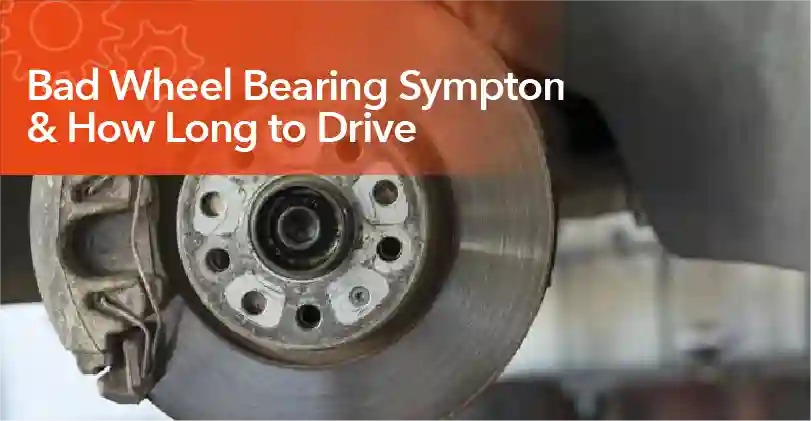
Bad Wheel Bearing Symptoms: Sounds, Signs & How Long You Can Drive
A humming or growling noise that gets louder as you speed up, and changes when you turn left or right, is the classic sign of a bad wheel bearing. If you are hearing this, get it checked soon. A bearing that fails completely can lock up a wheel while you are driving, which is a real safety risk, not just a noise problem.
A wheel bearing does not go bad overnight. It usually starts as a faint hum you barely notice, then slowly gets louder over weeks or months. Catching it early means a simpler, cheaper fix and less risk of the wheel locking up while you are driving.
At All Season Tire in Englewood, we road test your car, confirm which bearing is actually bad, and give you a free assessment before any work starts. No guessing, no unnecessary parts, and we will show you exactly what we found.
What Does a Bad Wheel Bearing Sound Like?
This is the number one thing people search for, and for good reason. A failing wheel bearing usually sounds like a hum, growl, or roar coming from one wheel area. Here is what makes it stand out from other car noises:
- It gets louder as your speed increases.
- It often changes pitch or volume when you turn. Weight shifts onto the bearing on one side during a turn, so a bad bearing on that side gets louder, while a bad bearing on the opposite side gets quieter.
- It is usually most noticeable on the highway, where higher speeds make the sound easier to hear over road and wind noise.
Drivers describe it in a lot of different ways: a low hum like a tire out of balance, a growl like a distant engine, or a roar that sounds like driving with the window cracked. If the sound tracks with your speed and shifts with turns, a wheel bearing is a strong suspect.
Front wheel bearings and rear wheel bearings can behave a bit differently. Front bearings tend to change more noticeably during turns, since more weight and steering force goes through the front wheels. Rear bearings often produce a steadier hum that is less affected by turning. Either way, the core clue is the same: a noise tied closely to your speed.
7 Signs of a Bad Wheel Bearing
Noise is the big one, but it is not the only clue. Here are the signs to watch for.
- Noise that changes with speed. Hum or growl that gets louder the faster you go, usually most noticeable between 30 and 60 mph.
- Worse when turning. The sound shifts in volume depending on which way you turn.
- Grinding sound. A more serious, metal-on-metal noise that means the bearing has worn badly.
- Wheel play or looseness. If you can wiggle the wheel with the car jacked up, there is play in the bearing.
- ABS or traction control light. Some bearings house the wheel speed sensor, so a failing bearing can trigger these lights.
- Uneven tire wear. A loose wheel bearing can cause a tire to wear unevenly on one side.
- Vibration. A steady vibration through the steering wheel or floor, especially at highway speed.
If you notice more than one of these, especially the noise plus a warning light or vibration, it is time to get it looked at. A vibration through the steering wheel can also point to other issues, like a suspension or alignment problem, so it helps to pair what you feel with what you hear. If you have also noticed your car shaking or idling rough, our post on why your car might be shaking or idling rough covers some of the overlapping causes worth ruling out.
How Long Can You Drive on a Bad Wheel Bearing?
Short answer: not long. A bad wheel bearing does not stay stable. It gets worse fairly quickly, and in the worst case, it can seize up completely and lock a wheel while you are driving. That is a serious safety risk, especially at highway speed.
Some drivers keep driving for weeks on a mild hum without an issue, but that does not mean it is safe. The bearing is wearing down the whole time, and you do not get a warning right before it fails. Our honest advice is simple: if you hear the noise, get it checked promptly. Do not wait for it to turn into a grinding sound or a wheel that feels loose.
Think of it like a slow leak rather than a sudden flat. The bearing is made of small rollers and races that wear down bit by bit every time the wheel turns. Once that wear starts, nothing reverses it, and the pace of failure tends to speed up rather than stay steady. Waiting it out is really just waiting for a bigger, more urgent repair, often at a less convenient time.
What Can Be Mistaken for a Bad Wheel Bearing?
A humming or growling noise is not always a bearing. A few other things can sound similar:
| Possible Cause | How It’s Different |
| Tire noise or cupping | Often changes with road surface, not just speed and turning. |
| CV axle | Usually clicking or clunking, especially in turns, rather than a steady hum. |
| Brake issue | Often a squeal or grind tied to braking, not constant while driving. |
| Differential | A whining noise tied to acceleration and deceleration, more common on rear-wheel-drive vehicles. |
This is exactly why a proper diagnosis matters. Replacing a wheel bearing when the real issue is a tire or a CV axle means you spend money without fixing the actual problem. A technician can isolate the noise to the correct wheel and confirm the cause before recommending a repair. If tire wear is part of what is bothering you, our post on how often you should rotate your tires is worth a read too, since uneven wear from a bad bearing can look similar to wear from a rotation issue.
How to Check for a Bad Wheel Bearing (Safe Check)
There is a limited but useful check you can do yourself, without raising the car:
- Find a quiet stretch of road and listen carefully as your speed increases.
- Note whether the sound gets louder with speed.
- Make a few gentle turns, left and right, and notice if the sound shifts.
- Roll the windows down to hear it more clearly, since road noise can mask a mild hum.
This road test approach is observational only. Checking for wheel play by jacking up the car and wiggling the wheel is best left to a shop, since it needs to be done safely with the vehicle properly supported.
One more thing to try: park somewhere quiet and open your window while a friend drives past you slowly. Sometimes it is easier to hear a bearing noise from outside the car than from the driver’s seat, especially if road and engine noise inside the cabin is drowning it out.
Colorado Note: Potholes, Water & Winter Roads
Front Range driving is not gentle on wheel bearings. Potholes send a hard jolt straight through the wheel and into the bearing every time you hit one, and Englewood streets get their share of them after winter freeze thaw cycles.
Water intrusion is another factor. Wheel bearings are sealed, but driving through deep puddles or standing water on the road can push water past worn seals over time, which speeds up corrosion and wear inside the bearing.
Winter road treatment adds one more layer. The salt and chemical treatments used on Colorado roads in winter are hard on a lot of metal parts, including bearing seals, especially on older vehicles.
If you drive a lot of Front Range streets, mountain roads, or winter commutes, it is worth paying closer attention to any new humming noise rather than assuming it will go away on its own. Bearings on vehicles that see a lot of pothole impacts and standing water tend to wear out sooner than the manufacturer’s typical estimate, so local driving conditions genuinely matter here.
Why It’s a Safety Issue and What Service Involves
A wheel bearing does one important job: it lets the wheel spin smoothly while carrying the weight of your car. When it fails completely, the wheel can seize, wobble badly, or in rare cases separate from the vehicle. None of those are things you want happening at highway speed.
Here is roughly what a proper bearing service involves:
- A road test and inspection to confirm which wheel has the bad bearing.
- A check for play by safely lifting the wheel and testing for movement.
- Ruling out other causes, like tires, CV axles, or brakes, so you are not replacing the wrong part.
- Replacing the hub and bearing assembly, then torquing it to the exact manufacturer spec.
That last step matters more than people realize. A wheel bearing has to be torqued precisely, since too loose or too tight can cause premature failure again. This is not really a driveway job for most cars, since it needs the right tools and torque specs to be done safely.
We reference the manufacturer’s torque specs and hub assembly guidance for every vehicle we work on, rather than a one-size-fits-all number. It is a small detail, but it is the difference between a bearing that lasts and one that starts humming again a few months later.
Get Your Wheel Bearing Checked in Englewood
If you have a hum or growl that changes with your speed, do not wait around hoping it fixes itself. At All Season Tire, we will road test your car, confirm exactly which wheel bearing is bad, and give you a clear, honest quote before we touch anything.
Call us at 720-877-4243 or stop by our Englewood shop to get it checked out.
Frequently Asked Questions
What does a bad wheel bearing sound like?
It usually sounds like a hum, growl, or roar that gets louder as your speed increases and shifts in volume when you turn left or right.
Can you drive with a bad wheel bearing?
You can drive short distances, but it is not something to put off. A bad bearing gets worse quickly and can eventually cause the wheel to seize, which is dangerous at speed.
How long can you drive on a bad wheel bearing?
There is no safe fixed number of miles, since it depends on how worn the bearing already is. The safest move is to get it checked as soon as you notice the noise, rather than waiting.
What can be mistaken for a bad wheel bearing?
Tire noise, a worn CV axle, a brake issue, or a differential problem can all sound similar. A proper road test and inspection is the only reliable way to tell them apart.
How do I know which wheel bearing is bad?
The noise usually gets louder when weight shifts onto that side during a turn. A technician can also check each wheel for play to confirm which one is failing.
How much does it cost to replace a wheel bearing?
Cost depends on your vehicle and which wheel needs it. A proper inspection gives you an accurate number for your specific car rather than a general estimate.
Can a bad wheel bearing cause a vibration or ABS light?
Yes. Some bearings house the wheel speed sensor used by the ABS system, so a failing bearing can trigger a warning light. A worn bearing can also cause a steady vibration, especially at highway speed.