
TPMS Light On? What the Warning Means (and the Cold Weather Cause)
Your TPMS light just came on, and now you’re wondering if it’s safe to keep driving. In most cases, it means one or more tires have lost pressure. Sometimes it’s a slow leak. Other times it’s just the cold outside. We’ll discuss both, plus how to fix it.
If you live in Englewood or anywhere around South Denver, you’ve probably noticed this light tends to show up on the same kind of morning every year, right when the temperature drops for the first time. That timing isn’t a coincidence. Cold air shrinks the air inside your tires, and that alone can trip the warning. We’ll get into why that happens, plus everything else worth knowing about the light.
What Does the TPMS Light Mean? Quick Answer
The TPMS light means at least one tire has dropped below the recommended tire pressure, usually by 25% or more. TPMS stands for tire pressure monitoring system. It’s a small sensor setup that tracks your PSI and warns you the moment something falls out of range.
The light itself looks like a horseshoe with an exclamation point. Once you see it, don’t ignore it. Check your pressure as soon as you can, ideally before you drive very far.
Solid vs Flashing TPMS Light: There’s a Big Difference
Not every TPMS light means the same thing, so pay attention to how it behaves.
A solid light simply means low pressure. Check your tires and add air where needed.
A flashing light is different. If it blinks for about 60 to 90 seconds when you start the car and then stays on, that points to a system or sensor problem rather than a pressure issue. This could be a dead sensor battery or a communication fault somewhere in the system.
Here’s a simple way to remember it:
| Light Behavior | What It Means | What To Do |
| Solid light | Low tire pressure | Check and fill your tires |
| Flashing at startup | Sensor or system fault | Have the system inspected |
| Light clears after driving | Pressure corrected itself or reset | Still confirm the pressure is correct |
If you’re ever unsure which one you’re seeing, treat it as a pressure problem first. Check your tires. If the light keeps flashing after that, it’s likely a sensor issue.
Why Your TPMS Light Comes On in Cold Weather
This is the part most guides skip, and it matters a lot if you drive in Colorado.
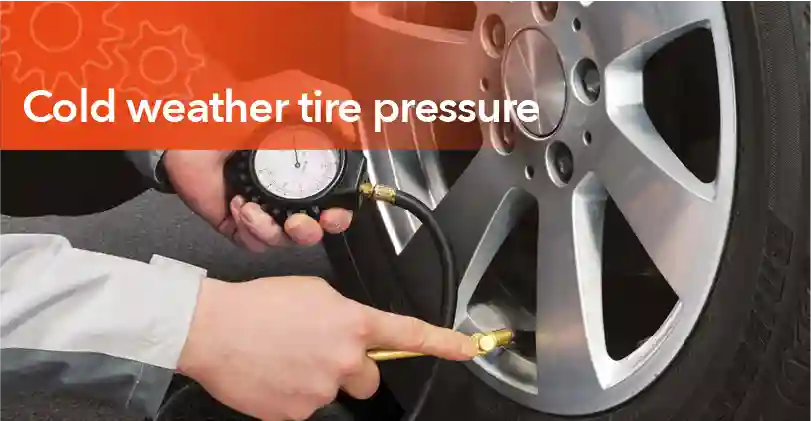
Tire pressure drops roughly 1 PSI for every 10°F the temperature falls. So, when Denver gets its first cold snap of the season, a tire that read 35 PSI in September might read 30 PSI or lower by late October. That’s often enough to trigger the light, even though nothing is actually wrong with the tire.
This happens because air contracts as it cools. It’s basic physics, not a flaw in your tires or your car. Still, a low reading is a low reading. The system doesn’t know the difference between “it’s cold outside” and “you have a leak,” so it warns you either way.
The fix is easy. Check your pressure and add air to match the recommended number. Don’t just ignore the light because you assume it’s the weather. Sometimes it is the weather, and sometimes it’s a genuine leak that happened to show up on a cold morning. You won’t know until you check.
How to Fix It: Check and Set Your Tire Pressure
Here’s a simple process you can do in your driveway.
- Find your car’s recommended tire pressure. It’s on a sticker inside the driver’s door, not on the tire itself. The tire sidewall lists a maximum pressure, which is a different number entirely.
- Check pressure when tires are cold. That means before you’ve driven more than a mile or two, ideally first thing in the morning.
- Use a reliable tire gauge and check all four tires, plus your spare if it has a sensor.
- Add air in small amounts and recheck often. It’s easy to overshoot.
- Once every tire matches the placard number, you’re done.
That placard number is the one that matters. A lot of drivers mix it up with the sidewall figure, and that mix-up can lead to overinflated tires, which wear unevenly and ride more harshly than they should.
Want a hand with this? Our tire installation team can check your pressure and set it correctly while you wait.
“My TPMS Light Is On, But My Tires Look Fine”
This is one of the most common questions we hear, and it makes sense. A tire can look completely normal even when it’s significantly underinflated.
You can’t judge pressure by eye. A tire might be 10 PSI low and still appear round and full, especially on a vehicle with larger sidewalls. The only way to know for sure is to check with a gauge. Don’t skip this step just because everything looks okay from where you’re standing.
If your gauge confirms the pressure is fine and the light is still on, the sensor itself might be the problem. That’s worth having looked at.
How to Reset the TPMS Light
Sometimes the light clears on its own once you’ve corrected the pressure and driven for a few minutes. Other times, you’ll need to reset it manually.
Most vehicles have a TPMS reset button, often located under the steering wheel. Here’s the general process:
- Turn the key to the “on” position without starting the engine, or turn on your car if it’s a push-button start.
- Find the TPMS reset button and hold it until the light blinks three times.
- Start the car and let it run for about 20 minutes so the system can relearn the pressure in each tire.
Steps vary a bit by make and model, so check your owner’s manual if this doesn’t match your car exactly.
One thing worth stressing: resetting the light without fixing the actual pressure doesn’t solve anything. It just hides the warning for a while. The problem is still there, and it’ll likely come back, possibly at a worse time.
When It’s a Slow Leak or a Failed Sensor
If your TPMS light keeps coming back after you’ve corrected the pressure, something else is probably going on.
A slow leak is a common culprit. This often comes from a nail or small puncture, or sometimes a worn valve stem. You might not see anything obvious, but the tire keeps losing a few pounds of pressure every week. If this sounds familiar, it’s worth getting the tire inspected rather than topping it off again and again.
A failed sensor is another possibility, especially if the light is flashing rather than staying solid. TPMS sensor batteries typically last five to ten years. Once one dies, the system can’t read that tire’s pressure anymore, and the light stays on regardless of how much air is actually in the tire.
If you suspect a leak, our flat tire repair service can find it and patch it properly, rather than just masking the symptom.
Is It Safe to Drive With the TPMS Light On?
You can usually drive short distances with the light on, but you shouldn’t ignore it for long. Underinflated tires carry real risks.
Low pressure increases the odds of a blowout, especially at highway speeds. It also hurts your braking distance, since underinflated tires don’t grip the road the way they should. Beyond that, it causes uneven tread wear and drags down your fuel economy, since your engine works harder to push soft tires down the road.
According to tire safety guidance from NHTSA, underinflated tires are a known factor in tire-related crashes, which is part of why federal law requires TPMS on all passenger vehicles built since 2008. That’s not a small detail. It’s worth taking the light seriously rather than hoping it goes away.
If you’re not sure whether it’s safe to keep driving, get your tires checked as soon as you reasonably can.
Free Tire Pressure Check in Englewood, CO
If your TPMS light is on and you’d rather not deal with guesswork, stop by. We’re a local Englewood tire shop, open seven days a week, and we offer free tire pressure checks. Our technicians see this exact issue constantly, especially during the first cold snap of the season, so we can usually tell within a few minutes whether you’re dealing with weather, a leak, or a sensor.
We also handle tire rotation, which pairs well with a pressure check since uneven wear often shows up around the same time pressure issues do.
Give us a call at 720-877-4243, or just drop in.
Frequently Asked Questions
What does the TPMS light mean?
It means at least one tire’s pressure has dropped below the safe range set for your vehicle. Check your pressure and correct it as soon as you can.
Can I drive with the tire pressure light on?
You can drive short distances, but you shouldn’t put it off. Underinflated tires wear unevenly, brake less effectively, and carry a higher blowout risk.
Why is my TPMS light on but my tires look fine?
Because you can’t judge tire pressure by sight. A tire can be significantly low and still look normal. Always confirm with a gauge.
Why does my tire pressure light come on when it’s cold?
Cold air causes tire pressure to drop, roughly 1 PSI for every 10°F. A cold morning can be enough to trigger the light even without a leak.
How do I reset the TPMS light?
It often clears on its own after driving with the correct pressure. If not, most cars have a reset button, usually near the steering column, that you hold until the light blinks.
What tire pressure should my car have?
Check the sticker inside your driver’s door. That number is specific to your vehicle, not the tire’s maximum rating printed on the sidewall.
Why is my TPMS light flashing instead of staying on?
A flashing light usually points to a sensor or system fault rather than low pressure. It’s worth having checked rather than assumed away.
How long do TPMS sensors last?
Most sensor batteries last five to ten years. Once one fails, that tire’s pressure can no longer be read, and the light will stay on until it’s replaced.